
Chicken Road 2 Game – Test Before You Bet

Chicken Road 2.0 is becoming a familiar part of Ireland’s gaming scene, drawing players in with fast sessions, total concentration, and that split second of anticipation before every move. Each tap forward pushes the multiplier higher, while one poorly timed decision brings the run to an instant finish. Everything revolves around precision, with no unnecessary distractions – just a smooth pace where patience pays and reckless reactions cost you. The road stays alive, traffic never stops shifting, and every outcome depends on your timing. Once you settle into the rhythm, each crossing feels surprisingly natural: your eyes find the opening, your finger makes the move, and the potential payout keeps growing. Straightforward mechanics, genuine suspense, and the kind of momentum that makes another “just one more clean run” feel impossible to resist.
What Chicken Road 2 Is Really About
Chicken Road 2 revolves around a straightforward lane-by-lane crossing mechanic. Your objective is to lead a small chicken through a dangerous highway, where every successful move raises your payout multiplier while a single misstep immediately ends the round. The pace is intentional: watch the traffic, judge the timing, then make your move. This interactive flow is exactly why many players describe it as a “tactile crash game.” Rather than sitting back as a multiplier rises on its own, you actively progress one tile at a time, making a series of small decisions that either build your run or bring it to an instant finish.
| 🏢 Provider: InOut | 🏆 Max Bet: 200 € | 💡 Bet History: 🚫 No |
| 📅 Release Year: 2025 | 🤑 Maximum Win: Up to 20,000 € | 🔒 Provably Fair: ✅ Yes |
| 🎲 Game Type: Crash Game | 📉 House Edge: 4,5% | 🚷 Multiple Bets per Round: 🚫 No |
| 🔑 Theme: Chicken, Highway, Danger | 📈 Multiplier Range: x1.01 – x3,608,855 | 🔇 Chat Room: 🚫 No |
| 🎯 RTP: 95,5% | ⏳ Betting Time: 6 seconds between rounds | 🎁 Free Bets: 🚫 No |
| 🌪️ Volatility: High | 🕒 Game Duration: Variable (until crash) | 🥇 Leaderboard: ✅ Yes |
| 💲 Minimum Bet: 0.01 € | 🤖 Auto Bet Function: 🚫 No | 📲 Mobile Compatible: ✅ Yes |
Each additional safe step pushes your multiplier even higher, increasing the value of your potential payout once you decide to hit cash out. The gameplay loop remains easy to understand, the risk is visible from the start, and long-term results rely largely on choosing an exit band in advance and sticking to it when the pressure begins to build.
Where to Play Chicken Road 2 Without Headaches
Choosing a good casino for Chicken Road 2.0 matters more than people think. You want frictionless play, fast payouts, and tools that help you manage sessions like an adult. Use this checklist to filter the noise:
- Payment clarity: instant crypto processing or straightforward card/alternative options, visible fees, and consistent confirmation times.
- Demo-first access: a visible free demo at the top of the page so you can practice exit bands before you stake anything.
- Responsible gaming controls: deposit limits, session timers, cool-off and self-exclusion, accessible from your profile in seconds.
- Provably fair transparency: seed and hash verification you can follow without reading an engineering textbook.
- Mobile-first performance: the game must feel crisp on phones, with snappy inputs and no clunky overlays blocking the action.
- Real support: live chat or quick-ticket response that answers in minutes, not days.
We’ve pressure-tested these criteria and recommend picking a platform that hits every point. The goal is a clean, safe environment where trying Chicken Road 2 for free is part of the normal flow, and switching to real play never feels risky or confusing.
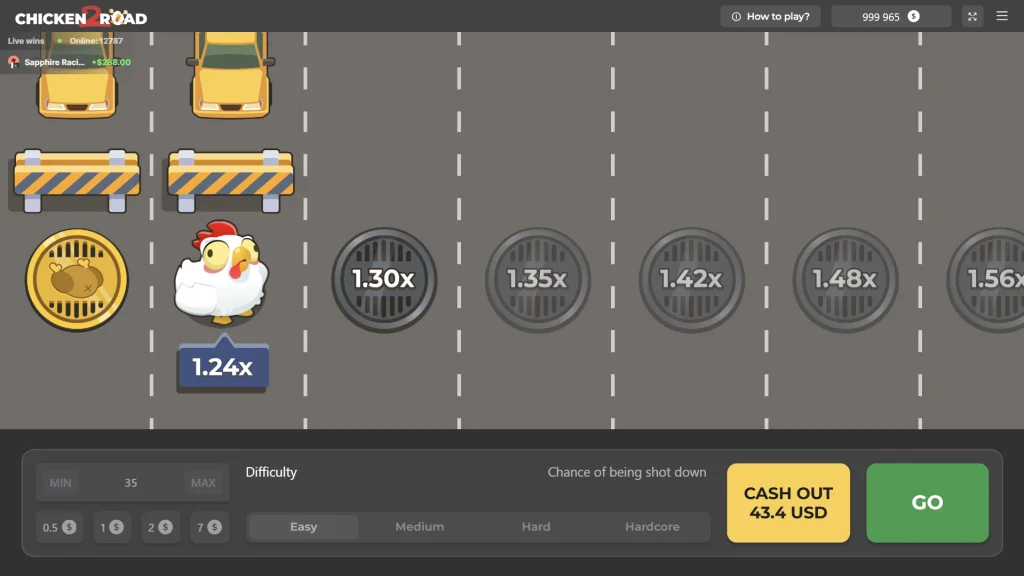
From Zero to Clean Cash-Out: How to Play Chicken Road 2.0
Entry thought: decide what “success” means before you even click Play. A small, boring plan beats a lucky spike that teaches you nothing.
1. Choose Your Difficulty
Pick Easy, Medium, Hard, or Hardcore. These are not cosmetic; they change traffic tempo, spacing, and pressure. Harder modes mean sharper swings and higher mental load per step.
2. Set a Sensible Stake
Start small. Chicken Road 2 rewards repeatable performance, not bravado. Flat stakes per session help you analyze your decisions later.
3. Take Your First Step
Tap to advance one lane. Give the screen your full attention. Avoid double-taps, and don’t chase the rhythm—create it.
4. Track the Multiplier
Each safe step nudges the multiplier upward. Compare it to your pre-decided exit band. If you hit the number, you’re done—no haggling with yourself.
5. Cash Out on Schedule
Lock the win the moment your target appears. Discipline now protects future you from tilt and second-guessing.
6. Log the Round
Write down stake, difficulty, exit multiplier, and whether you followed the plan. These tiny notes turn you from a hopeful button-clicker into a consistent operator.
Tip: if you ignore your exit band twice in a row, stop for five minutes. A micro-break resets nerves and prevents a messy third round.
RTP, Levels, and a Practical Multiplier Table
Chicken Road 2 advertises a theoretical RTP of 95.5% with a house edge of about 4.5%. That doesn’t predict your next session; it says the game pays slightly less than it takes over the very long run. Your edge comes from choosing the right difficulty for your mental state, sticking to a plan, and refusing to stretch exit bands when variance teases a bigger number. Use the table below to align expectations with reality.
| Level | Steps | Risk | Min/Max Multiplier | Lost Chance (per-step feel) | Suited For |
|---|---|---|---|---|---|
| Easy | 30 | Low | x1.01 – x23.24 | Low – traffic is forgiving, stalls are rare | First-time players, bankroll protection, demo-to-real transition |
| Medium | 25 | Moderate | x1.08 – x2 457 | Medium – occasional waves add pressure | Routine practice, 20-round sets, steady exit discipline |
| Hard | 22 | High | x1.18 – x62 162.09 | High – abrupt stalls test your timing | Short focused sprints, strict notes, tiny stake experiments |
| Hardcore | 18 | Very high | x1.44 – x3 608 855.25 | Very high – long flats and sudden wipes | Advanced players only, micro-stakes, pre-budgeted high-vol swings |
Why It Feels Different? Exclusive Traits That Define Chicken Road 2.0
Four Difficulty Tracks with Real Texture
Every difficulty level changes the pace of traffic, the distance between lanes, and the timing of safe crossing opportunities, creating a noticeable increase in mental demand that translates directly into gameplay. Easy leaves room to settle in and understand reliable exit ranges; Medium speeds things up and rewards sharper judgement; Hard cuts reaction windows and quickly exposes delayed decisions; Hardcore pushes the intensity further, making every successful tap feel well deserved. The rising challenge comes from how the road behaves, not simply from larger values shown on the screen.
Manual Timing over Automation
There are no auto-bet features or multi-bet combinations, so your focus remains fixed on a single lane throughout every round. Success comes down to staying alert, reading the rhythm correctly, and making one decisive tap at the right moment – straightforward to understand, yet consistently challenging to master.
Provably Fair Verification You Can Actually Follow
Each round is created using both server and client seeds, allowing you to check the outcome yourself after the game ends. The verification process feels practical rather than complicated: reveal the seed, match the hash, verify the result, and continue to the next round with confidence.
Fast Rounds for Tidy Testing
Most betting windows last roughly six seconds, making it easy to complete focused sessions of 10-25 rounds before reviewing your decisions. These brief cycles give you enough time to test different exit bands, compare the outcomes, and fine-tune your approach without losing concentration.
A Light Leaderboard for Motivation
The live leaderboard introduces a subtle competitive element without covering the interface in constant notifications or distracting chat messages. It provides just enough incentive to make a well-timed exit feel rewarding, while keeping the core gameplay loop as the main point of attention.
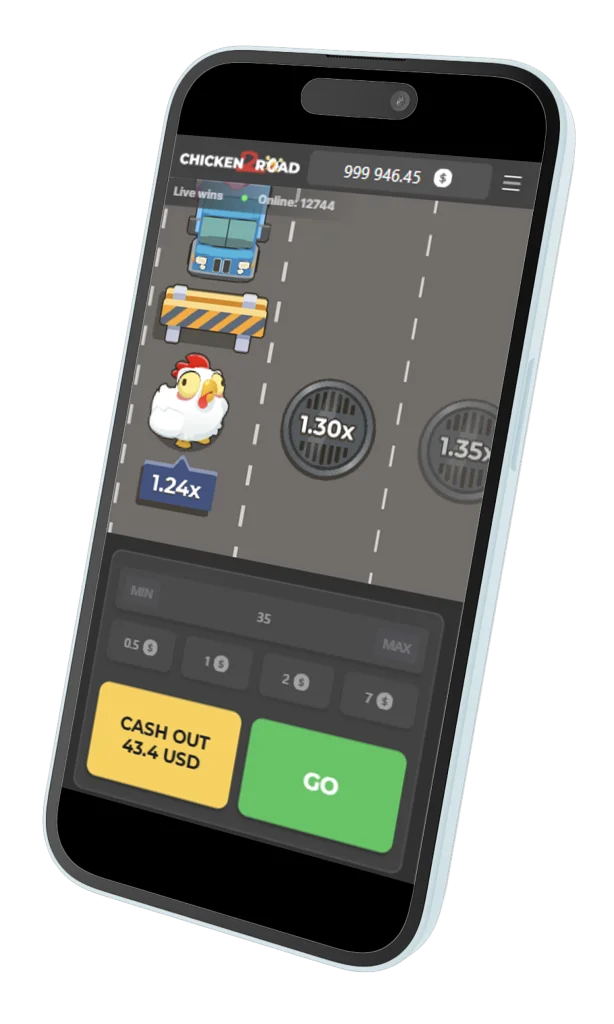
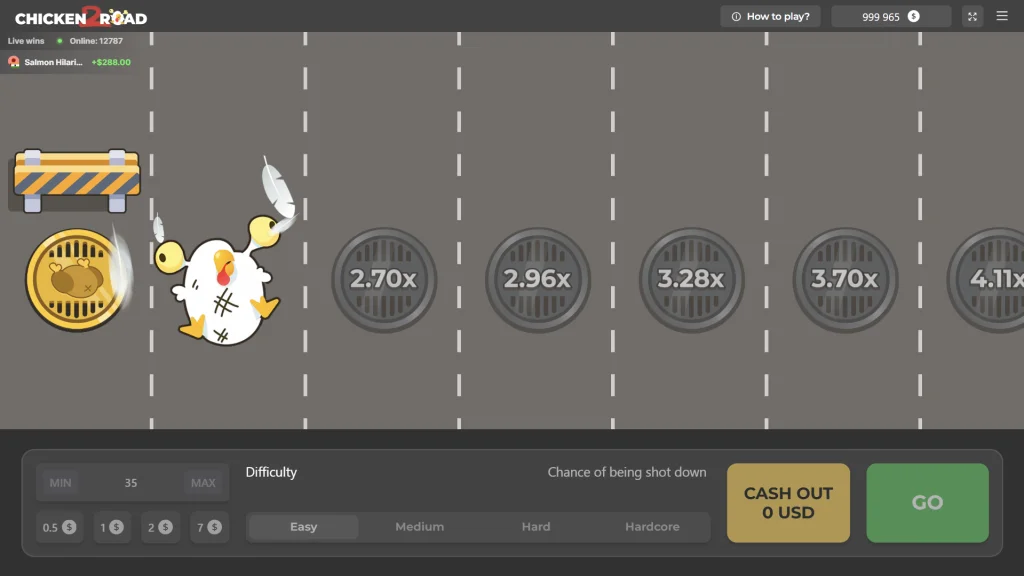
Chicken Road 2 Demo: Practice Like A Pro
Think of the free demo as a training ground rather than a place to chase excitement. It recreates the same pace, lane layouts, and overall difficulty, allowing every session to strengthen the habits you’ll rely on when real money is involved. Begin on Easy or Medium, choose a conservative target such as x1.6, and complete a 20-round session without adjusting your stake or switching difficulty.
Keep track of each occasion you stray outside your chosen band, then repeat the same exercise until those mistakes are almost eliminated. If you go beyond your band more than twice, restart the session and reduce your pace. Since the demo is available at the top of the page, moving from practice to live play takes only a few seconds. Once every run starts to feel predictable, you’ve reached the point where you can increase your approach gradually and with confidence.
What You’ll Love, What You’ll Tolerate: Pros and Cons
Chicken Road 2 shines when you treat it like a craft—short, focused sets, clear rules, and calm exits. Read the pros to see where it rewards discipline, and the cons to know where it pushes back.
Pros:
- Tight, readable loop that rewards planning, not impulse. You always know why you won or lost, which makes improvement tangible over a handful of sets.
- Four difficulty tracks for instant volatility control without changing stake size. You can dial risk to match your energy and focus instead of rebuilding your whole setup.
- Provably fair verification and a clean, browser-first setup. Outcomes are auditable, updates are silent, and you’re never forced into clunky app installs.
- Short rounds ideal for 10–25-run test blocks and note-taking. The quick cadence makes experimentation painless—switch exit bands, compare results, iterate.
- Free demo sits right on top, encouraging real practice before risk. You can rehearse timing, test levels, and only then move to real stakes with confidence.
Cons:
- High variance means you’ll meet flat patches and sudden wipes. The game can go cold; pre-set stop-loss and breaks keep you from chasing.
- No auto-bet or multi-bet if you prefer hands-free testing or hedged lines. It’s a purist’s loop—your attention and timing do the work.
- Minimalist by design—no chat or social layers mid-run. If you want constant chatter or side features, you won’t find them here.
Lean into what the game does best—measured decisions and clean exits. If you feel variance biting, drop difficulty, trim stakes, and move back to the demo until your rhythm returns.
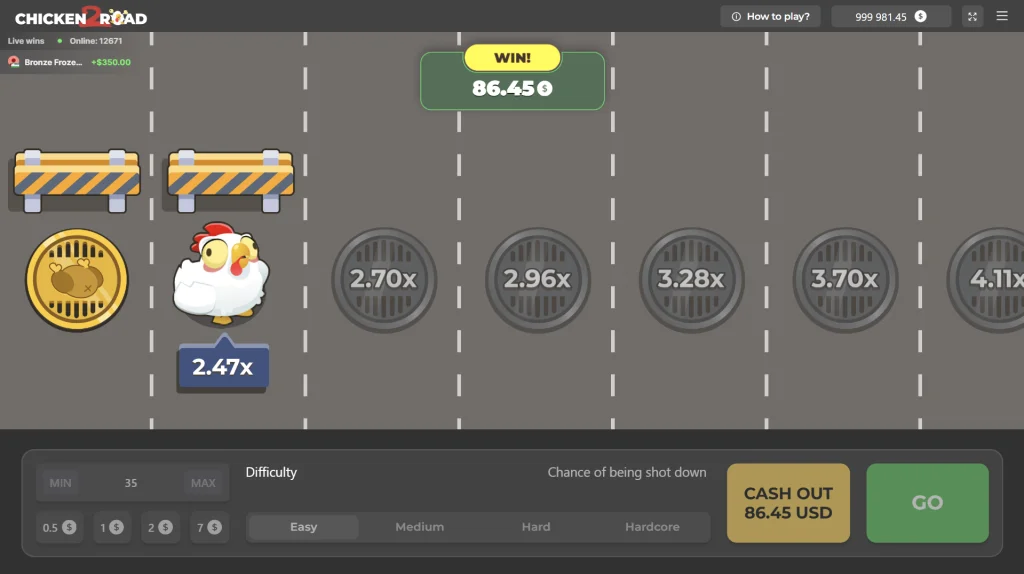
Win More By Being Boring: Practical Strategies That Actually Help
Decide Your Exit Band Before the Coin Leaves Your Pocket
Set a multiplier you know you’ll actually cash out at, then stick with that decision. A dependable x1.6 that you follow every time is far more valuable than chasing x5 and ending each session frustrated. Say your target aloud, keep it written where you can see it, and ignore anything beyond it. If you skip your planned exit twice during the same set, reduce the target by 0.1 and focus on building consistency again.
Flat-bet Your Set to Make Data Honest
Play every 10–25 round block with an identical stake to make each outcome easy to compare. Stable bet sizes lead to clearer records and better decisions over time. Once the stake never changes, it becomes much easier to tell whether your exit timing or selected difficulty is affecting performance. If a block finishes in the red, avoid trying to recover by doubling your bet. Instead, evaluate how closely you followed your plan and repeat the next set with the same stake.
Match Difficulty to Energy, Not Ego
Whenever you’re feeling tired or distracted, stick with Easy or Medium and concentrate on consistent exits. Reserve Hard and Hardcore for sessions when you’re fully alert and able to judge the rhythm of traffic accurately. Before every set, give yourself a quick rating for focus, mood, and available time on a scale from 1 to 5. If any category scores below 3, lower the difficulty or switch over to the demo.
Keep a Primary Band and a Single Contingency
Managing two rules is realistic; juggling ten usually leads to mistakes. You might target x1.8, while allowing an immediate x1.5 if traffic becomes unpredictable or latency suddenly increases. Define exactly when the backup applies before you begin, such as “first stutter, take x1.5,” so you never have to decide in the middle of a run. Record which option you used after every round to determine whether the backup improves consistency or simply cuts winning opportunities short.
Write a One-Line Session Card
Write down your stake, level, exit band, and stop-loss on a single visible line before playing. If you break any one of those rules, finish the session and come back later with a fresh start. This small routine reduces decision fatigue and prevents you from making up new exceptions on the fly. Take a photo of every completed card so you can compare sessions and identify which combinations consistently produce the cleanest exits.
Review the last 20, Not the Last 2
Look at a wider sample instead of reacting to the most recent outcomes. Monitor how often you ignored your planned exit, which level caused hesitation, and whether particular periods of play were linked to more mistakes. Use simple colours in your notes: green when you followed the plan, yellow for a delayed exit, and red whenever you broke your rules. Success comes from seeing more green across each set, not from chasing extraordinary multipliers.
So, Is It Worth Your Time? The Case for Trying Chicken Road 2
For players who enjoy games that reward a thoughtful approach, Chicken Road 2.0 is well worth exploring. It transforms classic crash mechanics into short, engaging sessions where patience and smart timing matter more than chasing excitement. The demo mode offers a genuine way to build confidence, the provably fair system ensures every outcome remains transparent, and the mobile browser version makes fitting in a quick game between daily tasks simple. Whether you’re discovering crash-style games for the first time or searching for a more polished and responsive experience, Chicken Road 2 deserves a place on your shortlist.
Chicken Road 2 FAQs – Your Questions, Our Answers
Is Chicken Road 2 Actually Legit or Just Good Marketing?
It supports provably fair verification, letting you audit outcomes with seed and hash checks after each round. On a reputable casino with clear payments and responsive support, the whole flow stays transparent from deposit to cash out. That transparency lets you focus on execution instead of worrying about fairness.
What Does 95.5% RTP Mean for a Real Person, Not a Spreadsheet?
It describes a long-run average that implies roughly a 4.5% house edge. Short sessions still swing hard, so flat stakes and consistent exit bands help you ride variance without chasing. Think of RTP as background climate, not the weather of your next round.
Can I Practice Without Risking a Cent?
Yes, the free Chicken Road 2 demo mirrors live pacing and lane patterns. Drill a single exit band for 20 rounds until it feels automatic, then scale cautiously with the same routine. Treat the demo like a warm-up that resets nerves and rhythm.
What Are Sensible Bet Sizes When Starting Out?
Limits typically span €0.01 to €200, but beginners should stick to a small, flat stake for a full set. Fixed sizing makes results comparable and your adjustments more meaningful. Increase only after several clean sets with solid exit discipline.
Are There Any Quality-of-Life Tips for Mobile Play?
Lock orientation, enable do-not-disturb, and prefer Wi-Fi for lower input lag. Keep taps deliberate — one touch, brief pause, reassess, then commit. A phone stand can also reduce accidental movement during tense moments.
What Are the Biggest Mistakes New Players Make?
Raising stakes after a lucky spike, pushing one step past the exit, and jumping to Hardcore while distracted. The fix is simple: flat stakes, clear exits, and short cooldowns after rough patches. Small habits prevent most expensive errors.
Responsible gambling is choosing the rules before the rush. Set a total budget, break it into small session stakes, and use a timer. Treat every wager as spent the moment you click Play, and take profits at your planned exit – never to chase a loss. Miss your rules twice? Stop, breathe, switch to the demo, and reset.
Watch the red flags: playing to escape stress, hiding spend, bumping stakes to recover, or feeling edgy when you can’t play. Only adults should participate, and real life always comes first. If control slips, pause immediately and talk to someone you trust or a professional support service. Entertainment with boundaries – that’s the win.